Organizing Kids’ Days with a Daily Schedule
Creating a structured routine for children can be one of the most effective ways to support their learning, development, and overall well-being. Whether you're homeschooling, managing distance learning, or simply looking to establish consistent habits, a Kids Routine Chart or Daily Schedule can make a significant difference. These tools offer clarity, help manage time efficiently, and provide a sense of security that children thrive on.
The Importance of a Structured Daily Schedule
A well-planned Daily Schedule is more than just a list of activities—it's a framework that supports both parents and kids in navigating the day with purpose. For young learners, especially those engaged in homeschooling or remote education, having a clear plan helps them stay focused and motivated. It also allows caregivers to balance schoolwork, playtime, meals, and rest without feeling overwhelmed.
Children benefit from predictability, and a Kids Routine Chart offers that by visually outlining what happens when. This visual aid can be particularly helpful for younger children who may not yet understand abstract concepts like "homework" or "bedtime." By seeing the schedule laid out in front of them, they can participate in planning their day and feel more in control of their time.
Features That Make a Good Daily Schedule Stand Out
A quality Daily Schedule should be flexible enough to adapt to changing needs while still providing structure. Here are some key features to look for:
- Customizable Layouts: A great Kids Routine Chart allows users to edit and rearrange activities based on individual preferences or specific needs.
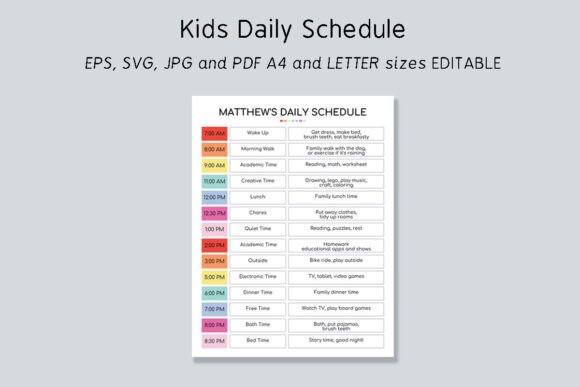
- Multiple File Formats: High-resolution files such as JPEG, PDF, EPS, and SVG ensure the chart can be printed or used digitally without losing quality.
- Size Options: Availability in both US Letter (8.5 x 11 inches) and A4 (21 x 29.7 cm) sizes makes it accessible for different printing and display needs.
- Visual Appeal: A clean, easy-to-read design helps children and adults alike stay engaged and motivated throughout the day.
Where Can a Daily Schedule Be Used?
A Kids Routine Chart is not limited to home use. It can be adapted for various settings and situations:
- Homeschooling: A daily schedule helps organize lessons, breaks, and extracurricular activities, ensuring a balanced educational experience.
- Distance Learning: With many students now learning remotely, a structured routine can help maintain focus and reduce distractions.
- Daycare Centers: Educators can use a Daily Schedule to plan activities, meal times, and nap schedules efficiently.
- Parental Time Management: A visual Kids Routine Chart can help parents coordinate their own tasks while keeping their child’s schedule on track.
Who Benefits from a Daily Schedule?
The benefits of a Daily Schedule extend beyond just children. Parents, teachers, and even older siblings can all find value in using a Kids Routine Chart:
- Parents: Gain peace of mind knowing their child has a structured day, reducing stress and helping them manage their own time better.
- Teachers: Use the Kids Routine Chart to plan classroom activities, manage transitions, and keep students engaged throughout the day.
- Children: Develop time management skills, learn responsibility, and build confidence through consistent routines.
- Siblings: Older siblings can assist in following the Daily Schedule, reinforcing good habits and promoting family cooperation.
Strengths and Considerations of a Daily Schedule
A Daily Schedule is a powerful tool, but it’s important to understand its strengths and limitations to use it effectively:
Strengths:
- Consistency: A regular routine helps children develop a sense of stability and security.
- Time Management: A Kids Routine Chart helps families allocate time wisely, ensuring that important tasks are completed without rushing.
- Flexibility: The best Daily Schedules allow for adjustments, making them adaptable to unexpected changes.
- Visual Clarity: Seeing the day laid out visually makes it easier for children to understand and follow the plan.
Considerations:
- Not One-Size-Fits-All: Every child is different, so a Kids Routine Chart should be tailored to individual needs and preferences.
- Need for Adjustment: Routines should be reviewed and updated regularly to reflect changes in the child’s life or learning environment.
- Over-Reliance Risk: While structure is important, too much rigidity can lead to frustration. It’s essential to allow for spontaneity and flexibility.
Real-World Applications and Scenarios
Let’s explore how a Kids Routine Chart can be applied in real-life situations:
Scenario 1: Homeschooling Family
A family with two children using a Daily Schedule can divide their day into blocks for math, reading, science, and free play. The Kids Routine Chart includes designated times for meals, breaks, and outdoor activities, helping the children stay on task and avoid burnout.
Scenario 2: Distance Learning Setup
For students attending online classes, a Daily Schedule ensures they have dedicated time for virtual lessons, assignments, and self-study. It also provides structure for physical activity and downtime, which is crucial for maintaining focus and mental health.
Scenario 3: Daycare Center
At a daycare center, a Kids Routine Chart can be used to plan group activities, snack times, and nap schedules. Teachers can refer to the chart to keep the day flowing smoothly and ensure each child receives the attention they need.
Evaluating Suitability for Your Needs
Before choosing a Kids Routine Chart, it’s important to evaluate whether it meets your specific requirements. Consider the following factors:
- Customization Options: Is the Daily Schedule editable? Can you add or remove activities as needed?
- File Compatibility: Does it come in formats that work with your preferred software or printing methods?
- Visual Design: Is the layout easy to read and visually appealing for children?
- Size and Format: Are the available sizes suitable for your intended use—whether it’s a wall chart, desk organizer, or digital calendar?
- Support and Updates: Does the provider offer customer support or updates to the Daily Schedule?
By carefully evaluating these aspects, you can select a Kids Routine Chart that best fits your lifestyle and educational goals.
Conclusion
A Kids Routine Chart or Daily Schedule is more than just a tool—it’s a way to bring order, consistency, and positivity to a child’s day. Whether you’re homeschooling, managing distance learning, or simply looking to create a more organized household, the right Daily Schedule can make all the difference. With its customizable layout, high-quality file formats, and practical design, this resource is an invaluable asset for parents, educators, and anyone invested in a child’s growth and development.